The core of the sun: It's magic

The core of sun The core of the Sun is considered to extend from the center to about 20–25% of the solar radius. It has a150 g/cm3 (about 150 times the density of water) and a temperature of close to 15.7 million kelvin (K).

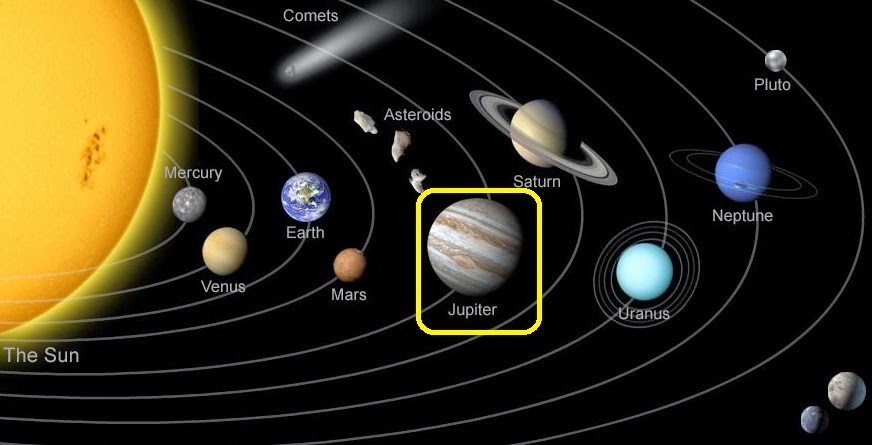
Jupiter: The 5th palnet

upiter is the fifth planet from the Sun and the largest planet in the Solar System. It is a gas giant with mass one-thousandth of that of the Sun but is two and a half times the mass of all the other planets in the Solar System combined. Jupiter is classified as a gas giant along with Saturn, Uranus and Neptune.

The Earth ... Our fantastic planet

Earth, also known as the world, Terra, or Gaia, is the third planet from the Sun, the densest planet in the Solar System, the largest of the Solar System's four terrestrial planets

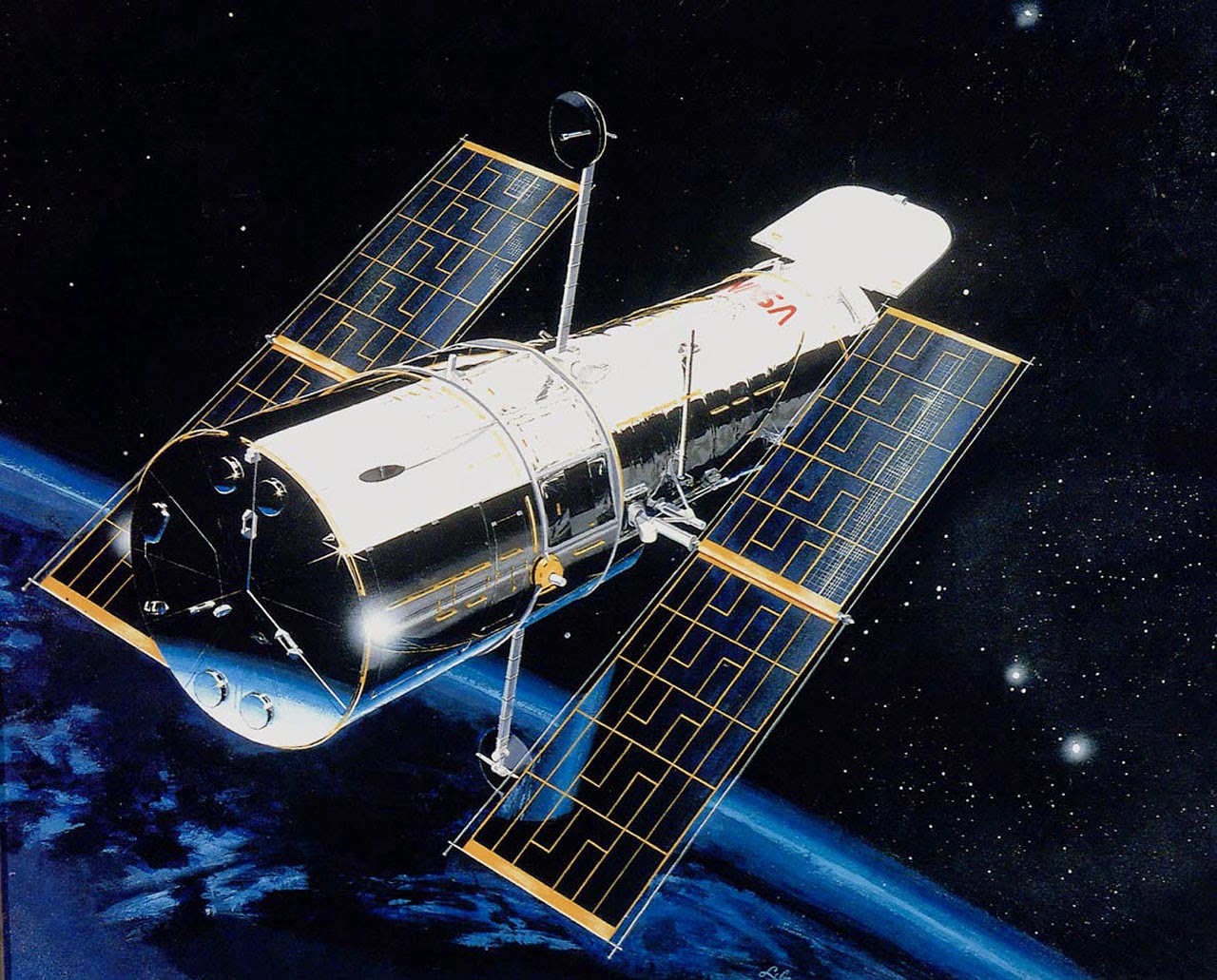
The magic Hubble Space Telescope

The Hubble Space Telescope (HST) is a space telescope that was launched into low Earth orbit in 1990near ultraviolet, visible, and near infrared spectra. The telescope is named after the astronomer Edwin Hubble. and remains in operation.

NASA Telescopes Uncover Early Construction of Giant Galaxy

Astronomers have for the first time caught a glimpse of the earliest stages of massive galaxy construction. The building site

Showing posts with label Hubble Space Telescope. Show all posts

Tuesday, September 16, 2014

The Monkey Head Nebula Is a Glittering Stellar Nursery


Peer closely at this photo and in the background, you’ll see galaxies the size of stars, and stars the size of huge version here]. But in the foreground is the Monkey Head Nebula (NGC 2174), captured in the infrared by the Hubble space telescope. It’s a region of wispy, turbulent gas and dust clouds — chaos enveloping a twinkling stellar nursery. This beautiful patch of starry sky is in the constellation Orion, about 6,500 light-years away. The nebula gets its name from the shape it takes when viewed in wide-field. This image doesn’t really give you the full primate-in-the-sky experience, so I’ve used that as an excuse to paste in a set of photos below. Sit back and stare, click to enlarge. 
galaxies

The Monkey Head' Nebula (Youtube)

More...


Tuesday, September 9, 2014

The magic Hubble Space Telescope

The Hubble Space Telescope (HST) is a space telescope that was launched into low Earth orbit in 1990near ultraviolet, visible, and near infrared spectra. The telescope is named after the astronomer Edwin Hubble.
and remains in operation. With a 2.4-meter (7.9 ft) mirror, Hubble's four main instruments observe in the
Hubble's orbit outside the distortion of Earth's atmosphere allows it to take extremely high-resolution images with almost no background light. Hubble's Deep Field has recorded some of the most detailed visible-light images ever, allowing a deep view into space and time. Many Hubble observations have led to breakthroughs in astrophysics, such as accurately determining the rate of expansion of the universe.
Although not the first space telescope, Hubble is one of the largest and most versatile, and is well known as both a vital research tool and a public relations boon for astronomy. The HST was built by the United States space agency NASA, with contributions from the European Space Agency, and is operated by the Space Telescope Science Institute. The HST is one of NASA's Great Observatories, along with the Compton Gamma Ray Observatory, the Chandra X-ray Observatory, and the Spitzer Space Telescope.
Space telescopes were proposed as early as 1923. Hubble was funded in the 1970s, with a proposed launch in 1983, but the project was beset by technical delays, budget problems, and the Challenger disaster. When finally launched in 1990, Hubble's main mirror was found to have been ground incorrectly, compromising the telescope's capabilities. The optics were corrected to their intended quality by a servicing mission in 1993.
Hubble is the only telescope designed to be serviced in space by astronauts. After launch by Space Shuttle Discovery in 1990, four subsequent Space Shuttle missions repaired, upgraded, and replaced systems on the telescope. A fifth mission was canceled on safety grounds following the Columbia disaster. However, after spirited public discussion, NASA administrator Mike Griffin approved one final servicing mission, completed in 2009. The telescope is still operating as of 2014, and may last until 2020.[6] Its scientific successor, the James Webb Space Telescope (JWST), is currently scheduled for launch in 2018.

Added from Wikipedia