
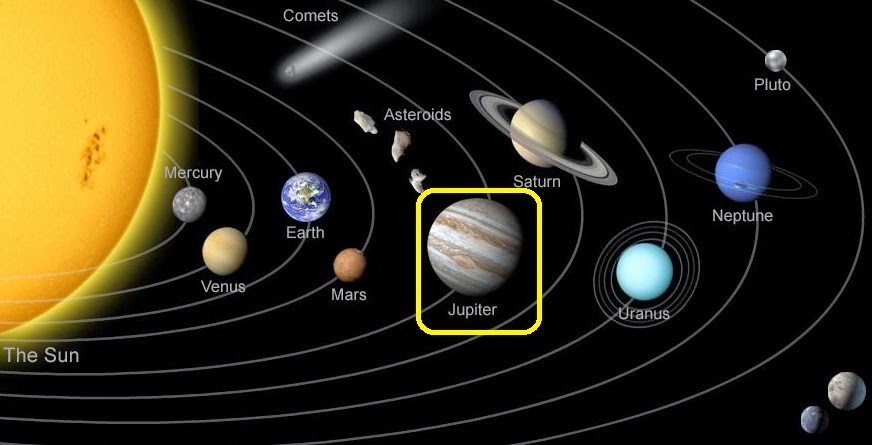


A star is a massive, luminous sphere of plasma held together by its own gravity. The nearest star to Earth is Sun,
which is the source of most of the planet's energy. Some other stars
are visible from Earth during the night, appearing as a multitude of
fixed luminous points due to their immense distance. Historically, the
most prominent stars were grouped into constellations and asterisms, and the brightest stars gained proper names. Extensive catalogues of stars have been assembled by astronomers, which provide standardized star designations.
the
For at least a portion of its life, a star shines due to thermonuclear fusion of hydrogen into helium in its core, releasing energy that traverses the star's interior and then radiates into outer space.
Once the hydrogen in the core of a star is nearly exhausted, almost all
naturally occurring elements heavier than helium are created by stellar nucleosynthesis during the star's lifetime and, for some stars, by supernova nucleosynthesis when it explodes. Near the end of its life, a star can also contain degenerate matter. Astronomers can determine the mass, age, metallicity (chemical composition), and many other properties of a star by observing its motion through space, luminosity, and spectrum respectively. The total mass of a star is the principal determinant of its evolution
and eventual fate. Other characteristics of a star, including diameter
and temperature, change over its life, while the star's environment
affects its rotation and movement. A plot of the temperature of many
stars against their luminosities, known as a Hertzsprung–Russell diagram (H–R diagram), allows the age and evolutionary state of a star to be determined.
 A star's life begins with the gravitational collapse of a gaseous nebula
of material composed primarily of[1] The remainder of the star's interior carries energy away from the core through a combination of radiative and convective processes. The star's internal pressure prevents it from collapsing further under its own gravity. Once the hydrogen fuel at the core is exhausted, a star with at least 0.4 times the mass of the Sun[2] expands to become a red giant, in some cases fusing heavier elements
at the core or in shells around the core. The star then evolves into a
degenerate form, recycling a portion of its matter into the interstellar
environment, where it will contribute to the formation of a new
generation of stars with a higher proportion of heavy elements.[3] Meanwhile, the core becomes a stellar remnant: a white dwarf, a neutron star, or (if it is sufficiently massive) a black hole.
A star's life begins with the gravitational collapse of a gaseous nebula
of material composed primarily of[1] The remainder of the star's interior carries energy away from the core through a combination of radiative and convective processes. The star's internal pressure prevents it from collapsing further under its own gravity. Once the hydrogen fuel at the core is exhausted, a star with at least 0.4 times the mass of the Sun[2] expands to become a red giant, in some cases fusing heavier elements
at the core or in shells around the core. The star then evolves into a
degenerate form, recycling a portion of its matter into the interstellar
environment, where it will contribute to the formation of a new
generation of stars with a higher proportion of heavy elements.[3] Meanwhile, the core becomes a stellar remnant: a white dwarf, a neutron star, or (if it is sufficiently massive) a black hole.
Binary
and multi-star systems consist of two or more stars that are
gravitationally bound, and generally move around each other in stable orbits.
When two such stars have a relatively close orbit, their gravitational
interaction can have a significant impact on their evolution.[4] Stars can form part of a much larger gravitationally bound structure, such as a star cluster or a galaxy.


